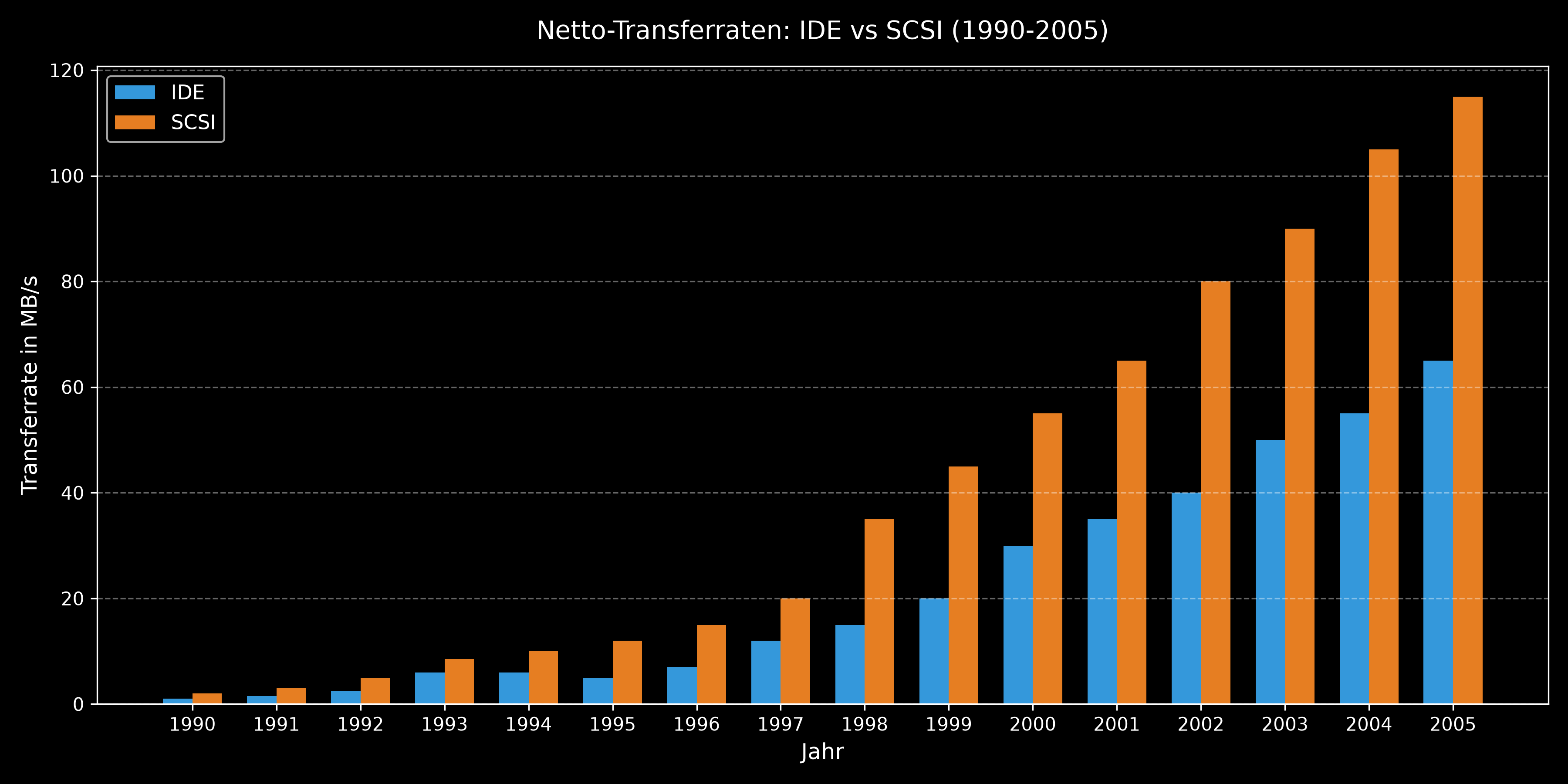
Festplatten 1990-2005
Hier mal eine Tabellensammlung mit üblichen Größen und Übertragungs-Geschwindigkeiten von Festplatten IDE und SCSI mit jeweils zeitgemäßen CPUs.
IDE-Festplatten von 1990-2005
Die Mechanik der Laufwerke war in den 90er Jahren der eigentliche Flaschenhals, sodass das theoretische Bus-Limit der Schnittstelle in der Praxis fast nie voll ausgeschöpft wurde.
So erreichten EIDE-Festplatten (mit 4.500 bis 5.400 U/min) zur Zeit des Pentium 133 in der Praxis lediglich kontinuierliche Leseraten von etwa 2,5 bis 5,0 MB/s, obwohl der Bus bereits 16,6 MB/s zuließ.
Ebenso bremste der klassische PIO-Modus das System aus, da die CPU die Daten selbst schaufeln musste und dadurch eine
hohe CPU-Last entstand.
Bei den Geschwindigkeiten ist zwischen theoretischem Limit der Schnittstelle (Bus-Bandbreite) und der tatsächlichen mechanischen Geschwindigkeit (Netto-Transferrate) zu unterscheiden!
| Jahr | Typische CPU | Bus-Standard & Modus | Übliche Kapazität | Max. Bus-Bandbreite | Reale Netto-Transferrate | Random Access Time |
|---|---|---|---|---|---|---|
| 1990 | 386SX / 386DX | ATA-1 (PIO Mode 0) | 40 MB | 3,3 MB/s | ~ 1,0 MB/s | ~ 25 ms |
| 1991 | 386DX / 486SX | ATA-1 (PIO Mode 1) | 80 – 120 MB | 5,2 MB/s | ~ 1,5 MB/s | ~ 20 ms |
| 1992 | 486DX-33 / 486DX-50 | ATA-1 / ISA IDE (PIO 2) | 120 – 250 MB | 8,3 MB/s | ~ 1,5 – 2,5 MB/s | ~ 18 ms |
| 1993 | 486DX/2-66 | VLB IDE (PIO Mode 3) | 340 MB | 11,1 MB/s | ~ 3,0 – 6,0 MB/s | ~ 15 ms |
| 1994 | 486DX/4 / Pentium 60 | VLB IDE (PIO Mode 4) | 500 MB – 1 GB | 16,6 MB/s | ~ 3,0 – 6,0 MB/s | ~ 13 ms |
| 1995 | Pentium 75 bis 133 | EIDE / ATA-2 (MW-DMA 2) | 850 MB – 1,2 GB | 16,6 MB/s | ~ 2,5 – 5,0 MB/s | ~ 12 ms |
| 1996 | Pentium 166 bis 200 | EIDE / ATA-2 (MW-DMA 2) | 1,2 – 2,1 GB | 16,6 MB/s | ~ 5,0 – 7,0 MB/s | ~ 11 ms |
| 1997 | Pentium MMX | ATA-4 (Ultra-ATA/33) | 3 – 6 GB | 33,3 MB/s | ~ 10,0 – 12,0 MB/s | ~ 9,5 ms |
| 1998 | Pentium II / Celeron | ATA-4 (Ultra-ATA/33) | 8 – 14 GB | 33,3 MB/s | ~ 12,0 – 15,0 MB/s | ~ 9,0 ms |
| 1999 | Pentium III / Athlon | ATA-5 (Ultra-ATA/66) | 15 – 20 GB | 66,6 MB/s | ~ 15,0 – 20,0 MB/s | ~ 8,5 ms |
| 2000 | Pentium 4 / Athlon Thunderbird | ATA-5 (Ultra-ATA/100) | 20 – 40 GB | 100,0 MB/s | ~ 25,0 – 30,0 MB/s | ~ 8,5 ms |
| 2001 | Pentium 4 / Athlon XP | ATA-6 (Ultra-ATA/100) | 40 – 80 GB | 100,0 MB/s | ~ 30,0 – 35,0 MB/s | ~ 8,5 ms |
| 2002 | Pentium 4 / Athlon XP | ATA-7 (Ultra-ATA/133) | 80 – 120 GB | 133,0 MB/s | ~ 40,0 MB/s | ~ 8,5 ms |
| 2003 | Pentium 4 HT / Athlon 64 | ATA-7 (Ultra-ATA/133) | 120 – 160 GB | 133,0 MB/s | ~ 45,0 – 50,0 MB/s | ~ 8,5 ms |
| 2004 | Pentium 4 (Prescott) / Athlon 64 | ATA-7 (Ultra-ATA/133) | 160 – 250 GB | 133,0 MB/s | ~ 55,0 MB/s | ~ 8,0 ms |
| 2005 | Pentium D / Athlon 64 X2 | ATA-7 (Ultra-ATA/133) | 250 – 500 GB | 133,0 MB/s | ~ 60,0 – 65,0 MB/s | ~ 8,0 ms |
Detaillierte Aufschlüsselung der Transfermodi
Das entscheidende Nadelöhr der frühen Jahre war die fehlende Intelligenz des IDE-Busses, die erst mit echten DMA-Modi abgelöst wurde.
PIO-Modi (Programmed Input/Output)
Im PIO-Modus gab es keinen direkten Speicherzugriff durch den Controller. Die CPU musste bei jedem Lese- und Schreibzugriff die Daten selbst durch die Register schaufeln. Das bremste das System bei großen Datentransfers spürbar aus und trieb die CPU-Last massiv nach oben.
| Modus | Theoretisches Maximum | Bemerkung |
|---|---|---|
| PIO Mode 0 | 3,3 MB/s | Theoretisches Limit des frühen ISA-IDE-Standards. |
| PIO Mode 1 | 5,2 MB/s | Minimal verbesserter Transfer, Standard bei späten 386ern. |
| PIO Mode 2 | 8,3 MB/s | Das praktische Maximum, was der 16-Bit-ISA-Bus übertragen konnte. |
| PIO Mode 3 | 11,1 MB/s | Standard für VLB-IDE (z.B. am 486er) und frühe EIDE-Platten. |
| PIO Mode 4 | 16,6 MB/s | Das absolute Maximum des PIO-Standards, typisch für schnelle EIDE-Festplatten ab dem 486DX4 oder frühen Pentiums. |
MW-DMA (Multi-Word DMA)
Hier konnte der Controller über Direct Memory Access (DMA) selbstständig in den Arbeitsspeicher schreiben, was die CPU entlastete.
| Modus | Theoretisches Maximum | Bemerkung |
|---|---|---|
| MW-DMA Mode 0 | 4,2 MB/s | Frühe und seltene Implementierung. |
| MW-DMA Mode 1 | 13,3 MB/s | Übergangsstandard. |
| MW-DMA Mode 2 | 16,6 MB/s | Populär mit dem EIDE / ATA-2 Standard zur Zeit des Pentium 133. Physisch war das Limit identisch mit PIO 4, jedoch bei viel geringerer CPU-Auslastung. |
UDMA (Ultra DMA / Ultra-ATA)
Mit echtem Hardware-Bus-Mastering sank die CPU-Belastung bei IDE-Zugriffen weiter auf beinahe 0 bis 5 %.
| Modus | Theoretisches Maximum | Bemerkung |
|---|---|---|
| UDMA Mode 0 | 16,7 MB/s | (Ultra-ATA/16) – Selten genutzt. |
| UDMA Mode 1 | 25,0 MB/s | (Ultra-ATA/25) – Selten genutzt. |
| UDMA Mode 2 | 33,3 MB/s | (Ultra-ATA/33) – Der Durchbruch. Kam 1997 mit Intels 430TX Chipsatz. |
| UDMA Mode 3 | 44,4 MB/s | (Ultra-ATA/44) – Selten genutzt. |
| UDMA Mode 4 | 66,6 MB/s | (Ultra-ATA/66) – Zwang den Markt zur Nutzung spezieller 80-adriger IDE-Kabel (statt 40-adrig), um Übersprechen der Signale zu verhindern. |
| UDMA Mode 5 | 100,0 MB/s | (Ultra-ATA/100) – Standard zur Zeit des Pentium 4 und frühen Athlon XP. |
| UDMA Mode 6 | 133,0 MB/s | (Ultra-ATA/133) – Die letzte Evolutionsstufe des parallelen ATA-Busses (IDE), bevor ab 2004/2005 SATA die Vorherrschaft übernahm. |
SCSI-Festplatten von 1990-2005
| Jahr | Typische CPU / System | SCSI-Standard (Bus-Breite) | Übliche Kapazität | Max. Bus-Bandbreite | Reale Netto-Transferrate | Random Access Time |
|---|---|---|---|---|---|---|
| 1990 | 386SX / 386DX | SCSI-1 (8-Bit) | 40 – 100 MB | 5,0 MB/s | ~ 1,5 – 2,0 MB/s | ~ 18 ms |
| 1991 | 386DX / 486SX | SCSI-1 / Fast SCSI | 80 – 200 MB | 5,0 – 10,0 MB/s | ~ 2,0 – 3,0 MB/s | ~ 16 ms |
| 1992 | 486DX-33 / 486DX-50 | Fast SCSI-2 (8-Bit) | 200 – 400 MB | 10,0 MB/s | ~ 3,5 – 5,0 MB/s (ISA-Limit) | ~ 14 ms |
| 1993 | 486DX/2-66 | Fast SCSI-2 (8-Bit) | 340 – 500 MB | 10,0 MB/s | ~ 6,0 – 8,5 MB/s (VLB-Limit) | ~ 12 ms |
| 1994 | 486DX/4 / Pentium 60 | Fast Wide SCSI-2 (16-Bit) | 500 MB – 1 GB | 20,0 MB/s | ~ 7,0 – 10,0 MB/s | ~ 10 ms |
| 1995 | Pentium 133 | Fast Wide SCSI-2 (16-Bit) | 1,0 – 2,1 GB | 20,0 MB/s | ~ 8,0 – 12,0 MB/s | ~ 9 ms |
| 1996 | Pentium 166 / Pentium Pro | Ultra SCSI (8-Bit) | 2,1 – 4,3 GB | 20,0 MB/s | ~ 10,0 – 15,0 MB/s | ~ 8 ms |
| 1997 | Pentium II | Ultra Wide SCSI (16-Bit) | 4,3 – 9,1 GB | 40,0 MB/s | ~ 15,0 – 20,0 MB/s | ~ 7,5 ms |
| 1998 | Pentium II / Xeon | Ultra2 Wide (16-Bit LVD) | 9,1 – 18 GB | 80,0 MB/s | ~ 25,0 – 35,0 MB/s | ~ 6,5 ms |
| 1999 | Pentium III | Ultra160 (16-Bit LVD) | 18 – 36 GB | 160,0 MB/s | ~ 35,0 – 45,0 MB/s | ~ 5,5 ms |
| 2000 | Pentium III / 4 | Ultra160 (16-Bit LVD) | 36 – 73 GB | 160,0 MB/s | ~ 45,0 – 55,0 MB/s | ~ 5,0 ms |
| 2001 | Pentium 4 / Xeon | Ultra160 (16-Bit LVD) | 36 – 73 GB | 160,0 MB/s | ~ 55,0 – 65,0 MB/s | ~ 4,5 ms |
| 2002 | Pentium 4 / Athlon MP | Ultra320 (16-Bit LVD) | 73 – 146 GB | 320,0 MB/s | ~ 65,0 – 80,0 MB/s | ~ 4,5 ms |
| 2003 | Xeon / Opteron | Ultra320 (16-Bit LVD) | 73 – 146 GB | 320,0 MB/s | ~ 80,0 – 90,0 MB/s | ~ 4,0 ms |
| 2004 | Xeon / Opteron | Ultra320 (16-Bit LVD) | 146 – 300 GB | 320,0 MB/s | ~ 90,0 – 105,0 MB/s | ~ 3,5 ms |
| 2005 | Dual-Core Xeon / Opteron | Ultra320 (Übergang zu SAS) | 300 GB (10k/15k RPM) | 320,0 MB/s | ~ 100,0 – 115,0 MB/s | ~ 3,5 ms |
Detaillierte Aufschlüsselung der SCSI-Standards und Übertragungsmodi
Während IDE in der frühen Ära die CPU über den PIO-Modus massiv ausbremste, profitierte SCSI von Anfang an von Hardware-Bus-Mastering, wodurch der Controller Daten eigenständig direkt in den Arbeitsspeicher schrieb und die CPU-Last auf beinahe 0 bis 5 % reduzierte. Die Weiterentwicklung von SCSI basierte primär auf der Erhöhung der Taktfrequenz ("Fast", "Ultra") und der Verdopplung der Kabel-Datenbreite von 8-Bit (Narrow) auf 16-Bit (Wide).
SCSI-1 und Fast SCSI-2 (Die 486er Ära)
- SCSI-1 (Asynchronous / Synchronous): Nutzte einen 8-Bit breiten Bus mit einem 50-poligen Kabel und erreichte maximal 5 MB/s.
- Fast SCSI-2 (10 MB/s): Verdoppelte den Bustakt auf 10 MHz. Die Leistung hing hier extrem vom verwendeten Mainboard-Bus ab:
Am 16-Bit-ISA-Bus (z.B. Adaptec AHA-1542) limitierte der Systembus den Durchsatz in der Praxis auf ca. 3,5 bis 5,0 MB/s.
Am VESA Local Bus (z.B. Adaptec AHA-2842A) konnten die 10 MB/s der Fast-SCSI-Spezifikation voll ausgereizt werden, was Netto-Raten von 6,0 bis 8,5 MB/s ergab. Auch frühe PCI-Karten wie der Dawicontrol DC-974 nutzten diesen Standard. - Fast Wide SCSI-2 (20 MB/s): Erweiterte den Bus auf 16 Bit (Wide) bei 10 MHz Takt. Hierfür wurde der Wechsel auf 68-polige Kabel notwendig.
Ultra SCSI (Die Pentium und Pentium II Ära)
Mit der Ultra-Spezifikation (auch Fast-20 genannt) wurde der Synchron-Takt auf 20 MHz erhöht.
- Ultra SCSI (20 MB/s): Blieb bei der 8-Bit-Breite (50-Pin) und verdoppelte den Datendurchsatz auf 20 MB/s. Typische Controller: Adaptec AHA-2940U.
- Ultra Wide SCSI (40 MB/s): Kombinierte 20 MHz Takt mit dem 16-Bit breiten Bus (68-Pin) und schaufelte bis zu 40 MB/s über den PCI-Bus. Typische Controller der Zeit: Adaptec AHA-2940UW und Tekram DC-390F.
LVD: Ultra2, Ultra160 und Ultra320 (Die Server & High-End Ära)
Ab 1998 stieß die parallele SCSI-Übertragung (SE bzw. Single-Ended) an ihre physikalischen Grenzen, da die hohen Taktraten zu starken Signalstörungen führten. Die Lösung war LVD (Low Voltage Differential), welches Störsignale eliminierte und längere Kabel erlaubte.
- Ultra2 Wide (80 MB/s): Der erste LVD-Standard. 16-Bit-Bus mit 40 MHz Takt. In dieser Zeit setzten sich Festplatten mit 10.000 U/min (wie die Seagate Cheetah) im Servermarkt durch, was die Zugriffszeiten drastisch auf unter 6 ms senkte.
- Ultra160 (160 MB/s): Nutzte Double Transition Clocking (Datenübertragung bei ansteigender und abfallender Taktflanke), um die Bandbreite auf 160 MB/s zu verdoppeln.
- Ultra320 (320 MB/s): Die absolute Endstufe des parallelen SCSI-Busses. Sie dominierte den Server- und Workstation-Markt bis ca. 2005. Ab hier stiegen die Drehzahlen der Festplatten auf bis zu 15.000 U/min, was Zugriffszeiten von 3,5 ms ermöglichte.
Da parallele Kabel bei diesen Frequenzen nicht mehr fehlerfrei funktionierten, wurde Ultra320 ab 2004/2005 schrittweise durch Serial Attached SCSI (SAS) abgelöst.
Vergleichstabelle IDE ./. SCSI
| Jahr | Typische Consumer CPU | Übl. Kapazität (IDE) | Übl. Kapazität (SCSI) | Netto-Transferrate (IDE) | Netto-Transferrate (SCSI) |
|---|---|---|---|---|---|
| 1990 | 386SX / 386DX | 40 MB | 40 – 100 MB | ~ 1,0 MB/s | ~ 1,5 – 2,0 MB/s |
| 1991 | 386DX / 486SX | 80 – 120 MB | 80 – 200 MB | ~ 1,5 MB/s | ~ 2,0 – 3,0 MB/s |
| 1992 | 486DX-33 / 486DX-50 | 120 – 250 MB | 200 – 400 MB | ~ 1,5 – 2,5 MB/s | ~ 3,5 – 5,0 MB/s (ISA-Limit) |
| 1993 | 486DX/2-66 | 340 MB | 340 – 500 MB | ~ 3,0 – 6,0 MB/s | ~ 6,0 – 8,5 MB/s (VLB-Limit) |
| 1994 | 486DX/4 / Pentium 60 | 500 MB – 1 GB | 500 MB – 1 GB | ~ 3,0 – 6,0 MB/s | ~ 7,0 – 10,0 MB/s |
| 1995 | Pentium 75 bis 133 | 850 MB – 1,2 GB | 1,0 – 2,1 GB | ~ 2,5 – 5,0 MB/s | ~ 8,0 – 12,0 MB/s |
| 1996 | Pentium 166 bis 200 | 1,2 – 2,1 GB | 2,1 – 4,3 GB | ~ 5,0 – 7,0 MB/s | ~ 10,0 – 15,0 MB/s |
| 1997 | Pentium MMX | 3 – 6 GB | 4,3 – 9,1 GB | ~ 10,0 – 12,0 MB/s | ~ 15,0 – 20,0 MB/s |
| 1998 | Pentium II / Celeron | 8 – 14 GB | 9,1 – 18 GB | ~ 12,0 – 15,0 MB/s | ~ 25,0 – 35,0 MB/s |
| 1999 | Pentium III / Athlon | 15 – 20 GB | 18 – 36 GB | ~ 15,0 – 20,0 MB/s | ~ 35,0 – 45,0 MB/s |
| 2000 | Pentium 4 / Athlon Thunderbird | 20 – 40 GB | 36 – 73 GB | ~ 25,0 – 30,0 MB/s | ~ 45,0 – 55,0 MB/s |
| 2001 | Pentium 4 / Athlon XP | 40 – 80 GB | 36 – 73 GB | ~ 30,0 – 35,0 MB/s | ~ 55,0 – 65,0 MB/s |
| 2002 | Pentium 4 / Athlon XP | 80 – 120 GB | 73 – 146 GB | ~ 40,0 MB/s | ~ 65,0 – 80,0 MB/s |
| 2003 | Pentium 4 HT / Athlon 64 | 120 – 160 GB | 73 – 146 GB | ~ 45,0 – 50,0 MB/s | ~ 80,0 – 90,0 MB/s |
| 2004 | Pentium 4 (Prescott) / Athlon 64 | 160 – 250 GB | 146 – 300 GB | ~ 55,0 MB/s | ~ 90,0 – 105,0 MB/s |
| 2005 | Pentium D / Athlon 64 X2 | 250 – 500 GB | 300 GB (10k/15k RPM) | ~ 60,0 – 65,0 MB/s | ~ 100,0 – 115,0 MB/s |
Diagramm Kapazitäten IDE vs. SCSI
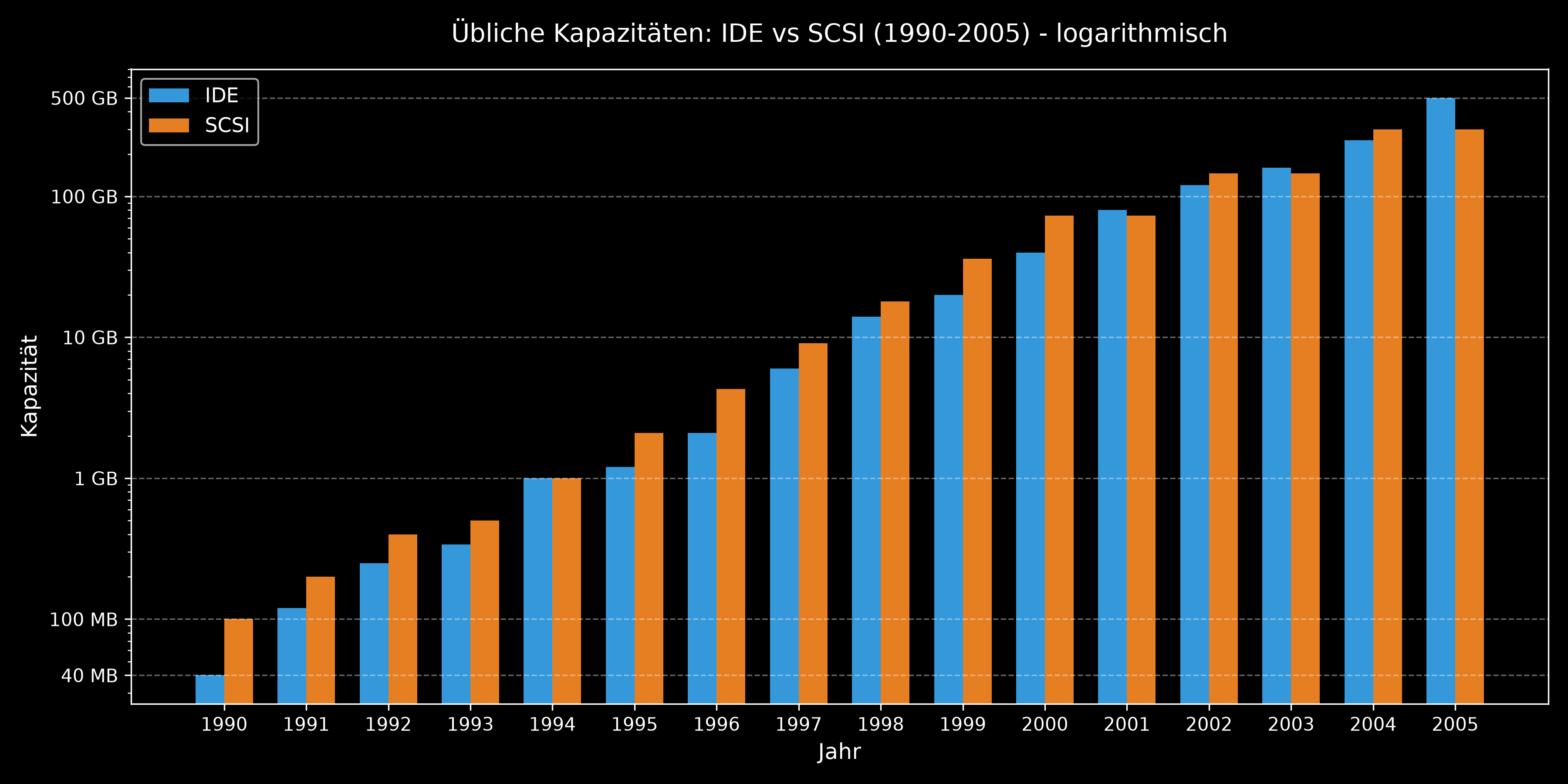
Diagramm Netto-Transferraten IDE vs. SCSI